Homemade soap making is the best DIY hobby. If you want to create the best skincare products, start a homemade soap business, or enjoy DIY skincare products with their ingredients. Learning to do DIY homemade soap is also an exceptional skill. Homemade soap is not like commercial soaps. We can control all ingredients. You select nourishing oils, colors, and essential oils that are tailored to your skincare needs. In the complete blog, you will learn everything about homemade soapmaking methods. At the end of this guide, you will have the confidence to DIY homemade soap safely.
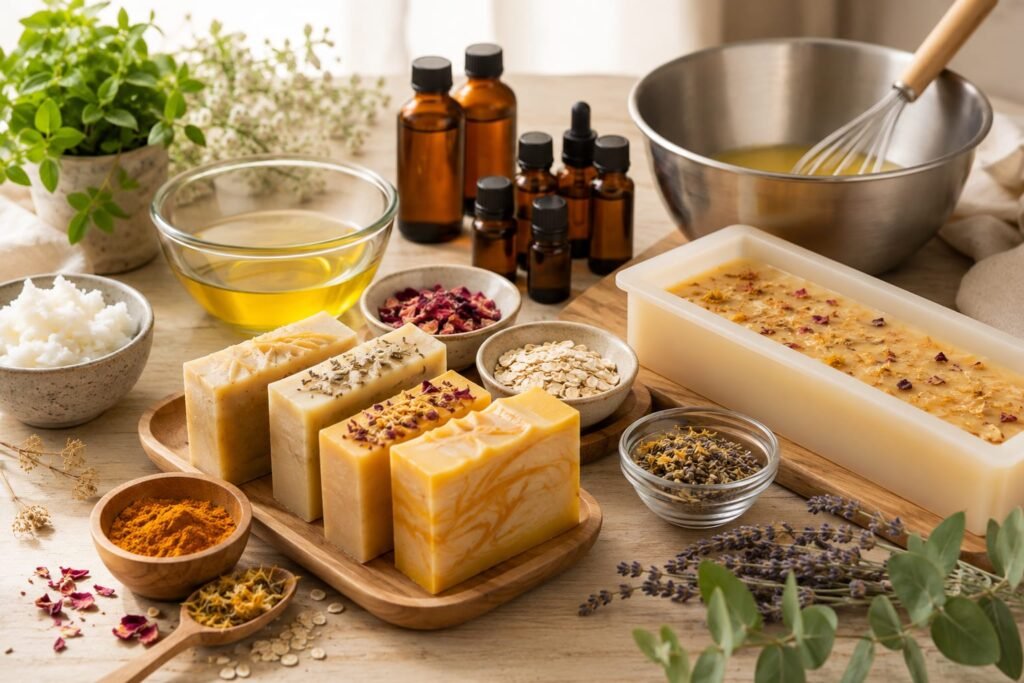
What is soap making?
Soap making is the process of making soap by combining different ingredients like oils, fats, and an alkali solution. Oils convert into soap. Glycerine is naturally made.
Why can we choose homemade soap?
Homemade soap has several benefits over other soaps
Best essential ingredients:
You may select every essential ingredient that goes into your soap.
Skin-loving formula:
Natural oils (nourish your skin) give your skin rich nourishment.
Freedom in product use:
You can customize your homemade soap according to your requirements. Like scents, your desired shape, and pattern
Homemade soapmaking complete guide
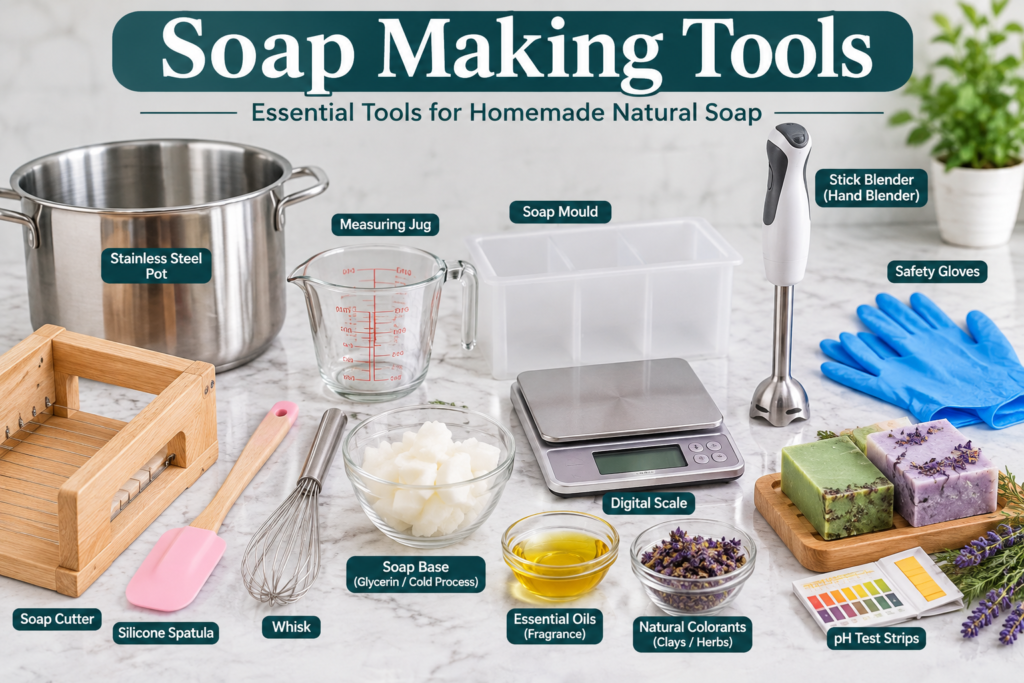
Required tools:
. Food Weighing Scale for measuring ingredients perfectly
. Heatproof container to avoid damage to the container
. Soapmaking pot for safely mixing ingredients
. Hand Blender for a well-combined soap mixture
. Rubber spatula for mixing soap
. Cooking thermometer for checking the temperature
. Soap Bar Mold for shaping the soap into bars
. Soap Slicer for cutting a large block of soap
. Eye Protection for protecting your eyes
. Safety gloves for protecting your hands
. Protective clothing for protecting your skin
Aluminium Avoidance:
Avoid aluminium because lye reacts with aluminium and produces harmful material
Homemade soapmaking Essentials
Natural Oils and Fats:
Natural oils provide fat-based acids used to create soap.
Common oils are
. Olive oil to create a soothing, moisturizing soap
. Coconut oil to create a cleansing soap bar.
. Castor oil supports the soap’s bubbles and conditioning feel.
. Avocado oil creates a moisturizing feel.
. Sunflower oil creates a less firm, skin-friendly feel.
. Shea Butter creates a creamier, conditioning soap bar.
. Cocoa butter improves bar firmness, lasting, and creamy texture.
. Olive oil is mainly used in homemade soap-making recipes
Purified Water:
Purified water is used to create the lye mixture.
Sodium Hydroxide:
Sodium hydroxide is referred to as lye. It is handled attentively because it is very dangerous